
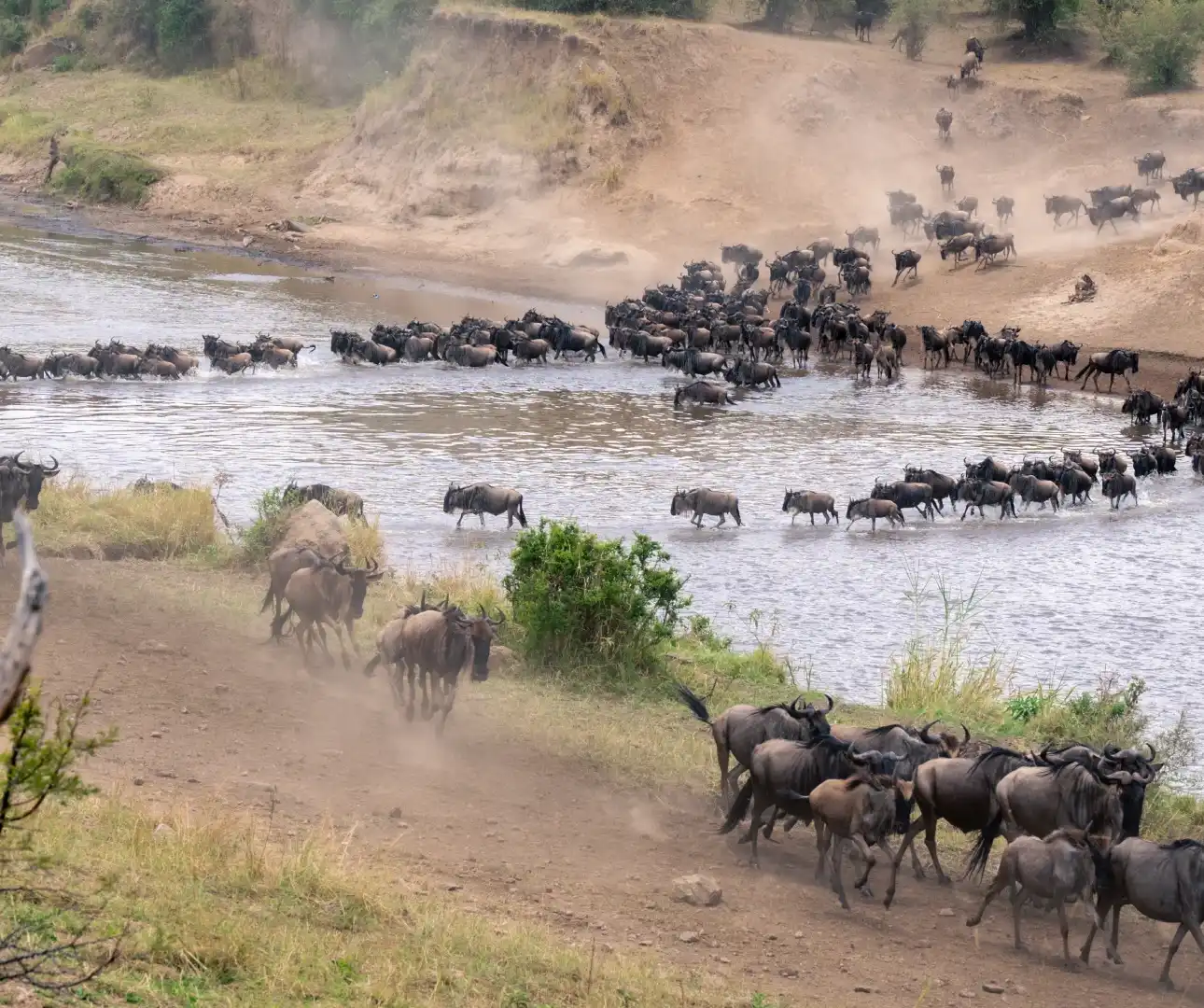
Serengeti Great Migration River Crossing Tours
The Serengeti Great Migration River Crossing Tours offer one of the most spectacular wildlife events on the planet. Every year, millions of wildebeest, zebras, and gazelles embark on a continuous journey across the vast plains of northern Tanzania in search of fresh grazing and water. The most dramatic and heart-stopping moment of this epic migration occurs during the river crossings in the northern region of Serengeti National Park.
For travelers seeking a once-in-a-lifetime African safari, witnessing the Great Migration river crossing is an unforgettable experience filled with raw emotion, breathtaking scenery, and powerful wildlife encounters.
What Is the Serengeti Great Migration?
The Great Migration is the largest overland wildlife migration on Earth. Over 1.5 million wildebeest, accompanied by approximately 300,000 zebras and thousands of gazelles, move in a clockwise pattern through the Serengeti ecosystem.
This natural phenomenon spans both Tanzania and Kenya, covering the Serengeti and extending into the famous Masai Mara National Reserve.
The migration is driven by rainfall patterns and the search for fresh grass. It is not a single event but a year-round cycle of movement, calving, survival, and dramatic predator encounters.
Why the River Crossing Is the Most Dramatic Phase
While the Great Migration happens throughout the year, the river crossings are considered the most thrilling stage. Between July and October, massive herds gather along the banks of the Mara River in northern Serengeti.
What makes this moment extraordinary?
- Thousands of animals crowd together at steep riverbanks
- Wildebeest hesitate for hours before one makes the leap
- Powerful currents sweep through the river
- Nile crocodiles wait silently beneath the surface
- Predators like lions and hyenas patrol nearby
When the first wildebeest jumps, chaos erupts. Hundreds follow in a dramatic surge of splashing water, dust, and survival instinct. It is nature in its rawest form.
When to Book a Serengeti River Crossing Tour
Best Time: July to October
The peak season for river crossing safaris is from mid-July through October. During these months, the herds move north toward the Mara River before crossing into Kenya.
However, migration timing depends heavily on rainfall patterns. That is why working with experienced safari guides is crucial. Professional guides monitor herd movements daily to position guests near active crossing points.
Shoulder Months
Late June and early November can also offer opportunities, though crossings may be less frequent.
Booking early is essential because luxury camps in northern Serengeti fill quickly during peak migration season.
Where Do River Crossings Take Place?
River crossings occur in the Northern Serengeti, particularly around the Mara River region. Key areas include:
- Kogatende
- Lamai
- Mara River viewpoints
These remote regions provide fewer crowds compared to Kenya’s side of the ecosystem, offering a more exclusive safari experience.
What Animals Can You See During River Crossing Tours?
While the wildebeest are the stars of the show, river crossing safaris offer exceptional wildlife diversity.
1. Wildebeest
The central figures of the migration. Their synchronized movement is driven by instinct and survival.
2. Zebras
Often lead the herds due to their strong memory and navigation skills.
3. Nile Crocodiles
Massive crocodiles inhabit the Mara River, sometimes reaching over five meters in length.
4. Lions
Northern Serengeti prides follow migration routes, taking advantage of the abundance of prey.
5. Cheetahs
Frequently spotted on open plains stalking isolated individuals.
6. Leopards
Found in riverine forests near crossing areas.
7. Hyenas
Highly opportunistic and commonly seen around crossing points.
Beyond predators, elephants, giraffes, buffalo, and countless bird species enrich the experience.
Types of Serengeti River Crossing Tours
Luxury Migration Safaris
Luxury safaris provide:
- Exclusive tented camps near crossing sites
- En-suite bathrooms and fine dining
- Private game drives
- Personalized guiding
Mobile camps relocate seasonally to stay close to the migration.
Mid-Range Safaris
Comfortable tented camps or lodges with excellent guiding services and prime migration access.
Fly-In Safaris
Guests fly directly from Arusha to northern Serengeti airstrips, saving time and maximizing wildlife viewing.
Private Safari Tours
Ideal for honeymooners, photographers, and families seeking customized experiences.
What to Expect on a Typical River Crossing Safari Day
Early Morning Game Drive:
Depart at sunrise when wildlife activity is highest. Guides monitor herd movements and position vehicles strategically.
Tracking the Herds:
Patience is key. Crossings are unpredictable and may take hours of waiting.
The Crossing Moment:
Suddenly, one wildebeest leaps. Within seconds, hundreds follow in a dramatic rush.
Afternoon Relaxation:
Return to camp for lunch and relaxation before an evening drive.
Sunset Over the Serengeti:
Golden light transforms the plains into a breathtaking landscape.
Photography Tips for River Crossings
- Use fast shutter speeds to capture action
- Bring telephoto lenses (200–400mm recommended)
- Be patient crossings are unpredictable
- Focus on storytelling, not just action
Golden hours (early morning and late afternoon) offer the best lighting conditions.
Is the River Crossing Safe for Tourists?
Yes. Visitors observe from safari vehicles at safe vantage points. Professional guides maintain distance and follow park regulations.
The danger exists for wildlife, not tourists.
Why Choose Tanzania Over Kenya for River Crossings?
While both countries share the migration, northern Serengeti offers:
- Fewer vehicles
- Less congestion
- More exclusive camps
- Vast, untouched landscapes
For travelers seeking authenticity and privacy, Tanzania’s Serengeti provides a superior experience.
Combining River Crossings with Other Destinations
A Great Migration safari pairs perfectly with:
- Ngorongoro Crater: A wildlife-rich volcanic caldera
- Tarangire National Park: Famous for elephant herds and baobabs
- Lake Manyara National Park: Known for tree-climbing lions
Many itineraries include 7 to10 days covering multiple ecosystems.
Cost of Serengeti River Crossing Tours
Prices vary depending on season and accommodation level.
- Mid-range safaris: $3,000–$5,000 per person
- Luxury safaris: $6,000–$12,000+ per person
- Private fly-in safaris cost more but maximize time
Peak migration season commands higher rates due to demand.
Booking Tips for the Best Experience
- Book 6–12 months in advance
- Choose experienced local safari operators
- Confirm northern Serengeti accommodation
- Ask about guide experience with migration tracking
Why the Serengeti River Crossing Is a Bucket-List Experience
Few wildlife events compare to the Great Migration river crossing. It is a symbol of survival, instinct, and the delicate balance of nature.
The thunder of hooves, the tension before the leap, the splash of water, and the raw struggle against predators create memories that last a lifetime.
For travelers dreaming of Africa, a Serengeti river crossing safari is not just a holiday it is a powerful encounter with the wild.