
Best Time to See the Great Wildebeest Migration in the Serengeti National Park
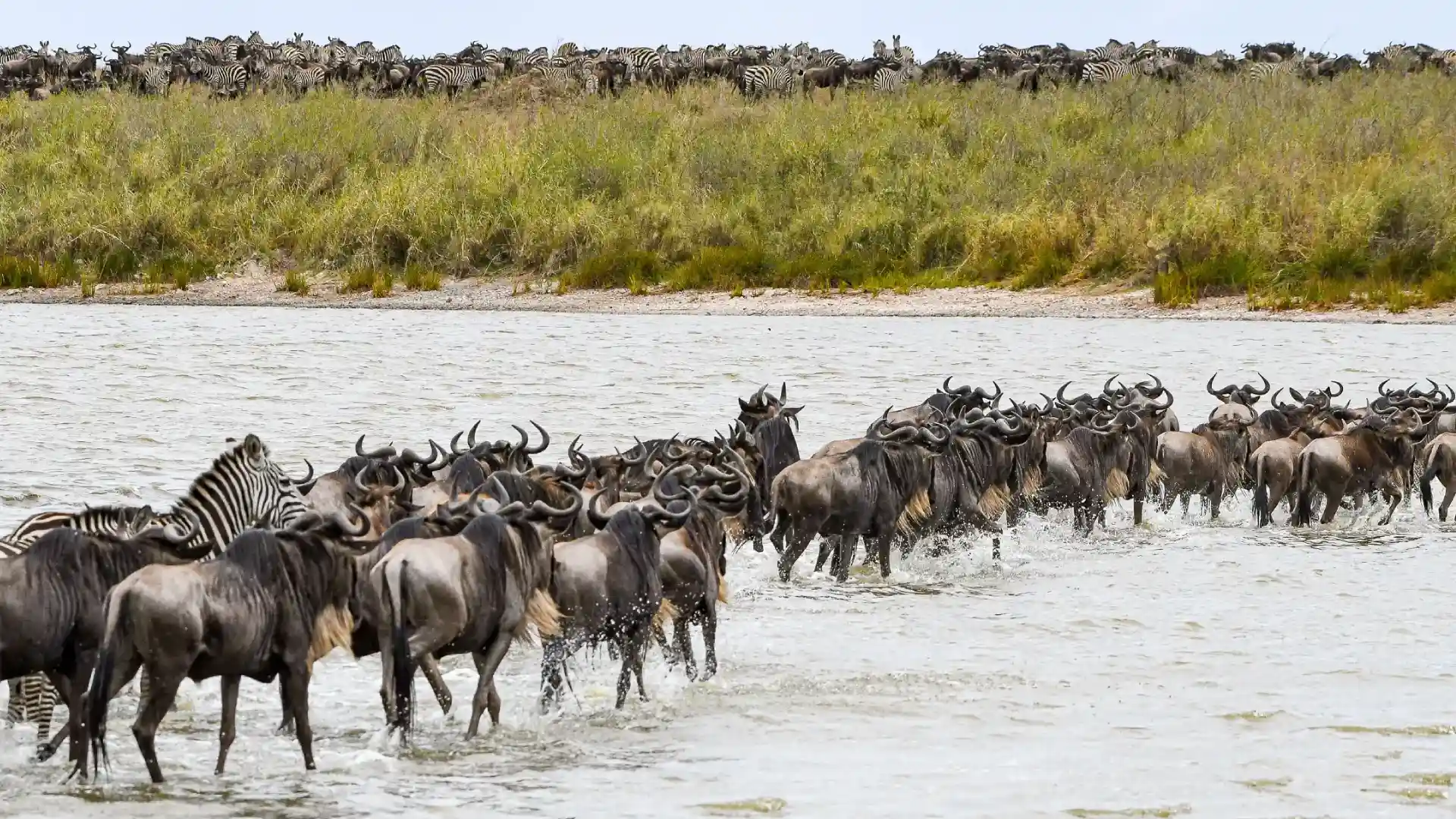
The Great Wildebeest Migration is the most dramatic wildlife spectacle on Earth. Over 1.5 million wildebeest, accompanied by hundreds of thousands of zebras and gazelles, moving in a circular journey across the Serengeti ecosystem in northern Tanzania and into Kenya’s Maasai Mara National Reserve.
If you’re planning a Tanzania safari, one question matters most:
When is the best time to see the Great Wildebeest Migration in the Serengeti?
The answer depends on what you want to witness. River crossings, calving season, predator action, or massive herds stretching to the horizon. This detailed guide breaks down the migration month by month so you can plan your trip strategically for the experience you want. Here is the Great Migration itinerary.
Understanding the Great Wildebeest Migration
The migration is not a single event. It is a continuous, year-round movement driven by rainfall and fresh grazing. The herds move in a clockwise pattern through the Serengeti ecosystem:
- Southern Serengeti (Ndutu plains)
- Central Serengeti (Seronera)
- Western Corridor (Grumeti area)
- Northern Serengeti (Mara River region)
- Maasai Mara (Kenya)
- Then back south again
Because of this natural cycle, there is no single “bad” time to visit. Only different highlights throughout the year.
Month-by-Month Guide to the Wildebeest Migration
January – March: Calving Season (Southern Serengeti / Ndutu)
Best for: Baby wildebeest, predator action, dramatic wildlife scenes
Location: Southern Serengeti & Ndutu plains
This is one of the most underrated and arguably most exciting times to visit.
Between late January and February, over 500,000 wildebeest calves are born within just a few weeks. The flat, open plains allow mothers to see predators from a distance, making it ideal for birthing season.
Why this is incredible:
- Thousands of newborn calves daily
- Lions, cheetahs, and hyenas actively hunting
- Dramatic predator-prey interactions
- Fewer tourists than river crossing season
- Excellent photography conditions
The grass is short, visibility is high, and wildlife density is extraordinary.
Best for photographers and travelers who want raw wildlife drama.
April – May: The Long Rains (Low Season, Moving North)
Best for: Fewer crowds, green landscapes, budget travel
Location: Central & Western Serengeti
April and May are considered the “long rainy season.” Some safari camps close temporarily, and roads can become muddy.
However:
- Landscapes are lush and green
- Fewer safari vehicles
- Lower accommodation rates
- Incredible storm photography
The herds begin moving northwest toward the Western Corridor.
This period is less predictable but can offer excellent value for travelers wanting a quieter Serengeti experience.
June – July: Grumeti River Crossings (Western Serengeti)
Best for: Early river crossings and large herd movements
Location: Western Corridor (Grumeti region)
By June, the rains stop and the herds gather near the Grumeti River. Here they face crocodile-infested waters in dramatic crossings.
This is a build-up period before the famous Mara River crossings. You’ll see:
- Massive columns of wildebeest moving
- Tension building near riverbanks
- Predator activity increasing
July marks the start of peak safari season in Tanzania.
August – October: Mara River Crossings (Northern Serengeti)
Best for: The most dramatic river crossings
Location: Northern Serengeti (Kogatende area)
This is what most people imagine when they think of the Great Migration.
Huge herds gather at the Mara River, hesitating at the banks before plunging into the water. Crocodiles wait below. Lions and leopards patrol nearby.
River crossings are unpredictable> They may happen several times a day or not at all but when they happen, they are unforgettable.
Why this is peak season:
- High drama
- Iconic safari moments
- Clear weather
- Excellent road conditions
Downside:
- Higher prices
- More safari vehicles in popular crossing points
For many travelers, this is the ultimate Serengeti safari experience.
November – December: The Return South
Best for: Herd movement and balanced safari experience
Location: Central & Southern Serengeti
Short rains begin in November. The herds gradually leave the north and move south toward the Ndutu plains again.
This is a transitional but beautiful time:
- Fresh green grass
- Dramatic skies
- Good predator activity
- Fewer tourists compared to peak season
By December, the migration settles again in southern Serengeti, completing the cycle.
So, When Is the BEST Time Overall?
It depends on your goal:
| Experience | Best Months |
|---|---|
| Calving & Predator Action | January – March |
| Fewer Crowds & Green Landscapes | April – May |
| Early River Crossings | June – July |
| Famous Mara River Crossings | August – October |
| Balanced Experience | November – December |
If you want the most iconic migration moment, choose August–September.
If you want intense predator action and baby animals, choose February.
If you want better prices and fewer crowds, consider May or November.
Where to Stay for the Migration
Your accommodation location is crucial. The Serengeti is massive (14,750 km²), so being in the right region during the right month is everything.
Options include:
- Mobile tented camps that move with the herds
- Luxury lodges inside the park
- Permanent tented camps in strategic migration corridors
Staying inside the Serengeti allows early morning access before other vehicles arrive.
Tips for Planning a Migration Safari
1. Book Early
Peak migration season (Aug–Oct) sells out 6–12 months in advance.
2. Stay Minimum 3 Nights
Migration is unpredictable. More nights = higher chance of witnessing crossings.
3. Choose the Right Area
Don’t book “Serengeti” without confirming the region.
4. Work With Local Safari Experts
Guides track herd movements daily using ranger reports and experience.
5. Combine with Ngorongoro Crater
Adding the nearby Ngorongoro Crater increases your chance of seeing the Big Five in one trip.
Why the Serengeti Is Unique
Unlike many wildlife destinations, the Serengeti offers:
- Year-round wildlife
- Massive open plains
- Predator density among the highest in Africa
- Authentic safari atmosphere
- No fences restricting wildlife movement
The migration is not staged. It is wild, raw, and completely natural.
Frequently Asked Questions
Is the migration guaranteed?
No wildlife event is 100% guaranteed. Movement depends on rainfall.
How many days do I need?
At least 4–5 safari days for good chances.
Is it safe?
Yes. Safaris are guided by professionals and conducted in secure vehicles.
Is it worth the price?
Absolutely. It is considered one of the greatest wildlife experiences on Earth.
Final Thoughts: Choosing Your Perfect Time
The best time to see the Great Wildebeest Migration in the Serengeti depends on your expectations.
If you dream of dramatic river crossings and crocodile-filled waters — go August to October.
If you prefer newborn animals and intense predator activity — go January to March.
If you want better value and fewer crowds — consider the green season months.
No matter when you visit, the Serengeti delivers unforgettable wildlife encounters.