
Kilimanjaro Climb Itinerary Explained Day by Day
Climbing Mount Kilimanjaro is a life-changing adventure, and understanding the day-by-day itinerary is essential for first-time climbers. Each day brings a unique environment, challenges, and stunning landscapes. Following a structured itinerary ensures proper acclimatization, improves summit success, and enhances your overall trekking experience.
This guide explains a typical Kilimanjaro climb itinerary, highlighting what to expect each day and how to prepare.
Day 1: Arrival and Pre-Climb Preparation
Most climbers fly into Kilimanjaro International Airport (JRO) and transfer to Arusha or Moshi, the main trekking hubs.
- Meet your guide and trekking team
- Review itinerary, safety procedures, and gear
- Pack your rucksack for the trek
- Get a good night’s rest before the climb
Arriving a day early helps you recover from jet lag and start the trek refreshed.
Day 2: Trek to the First Camp
The first trekking day typically begins from the trailhead, depending on the chosen route (Machame, Lemosho, Rongai, or Marangu).
- Enter Kilimanjaro National Park and register your permit
- Walk through the lush rainforest, spotting exotic plants and possibly monkeys
- Cover a moderate distance to reach your first campsite
This day allows your body to adjust to the altitude gradually.
Day 3: Entering the Moorland Zone
As you ascend, the landscape changes to heath and moorland.
- Trek at a steady pace, enjoying views of giant lobelias and senecias
- Take short breaks to hydrate and acclimatize
- Camp at higher elevation, preparing for longer trekking days
Many operators emphasize slow, steady pacing to prevent altitude sickness.
See our Kilimanjaro Altitude Sickness: Symptoms & Prevention guide for tips.
Day 4: Alpine Desert and Steeper Trails
Higher elevations bring the alpine desert zone with barren landscapes and dramatic skies.
- Trek longer distances with gradual elevation gain
- The air becomes thinner; walk pole pole (slowly)
- Prepare mentally and physically for summit night
This day is crucial for acclimatization before the challenging ascent.
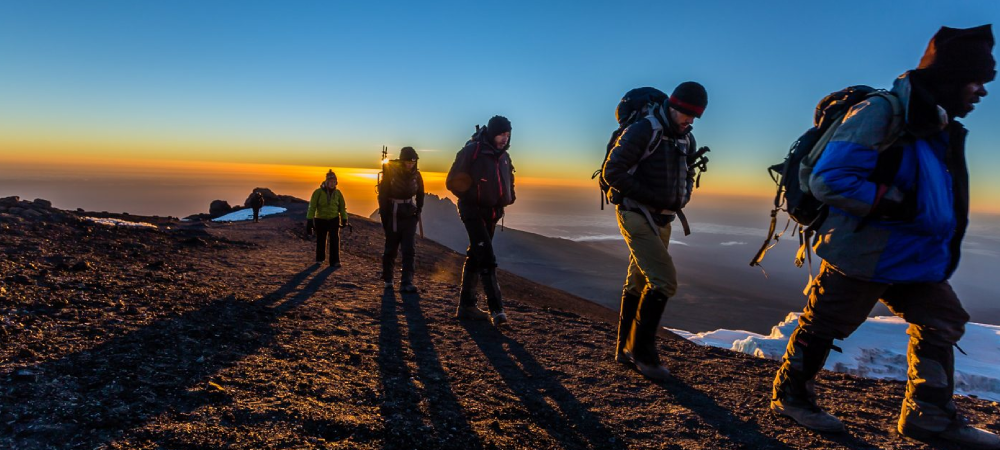
Day 5: Summit Night
Summit night is the most demanding part of the climb.
- Start between 11 PM and midnight to reach the summit at sunrise
- Trek in the cold with headlamps and trekking poles
- Pace yourself carefully and take short breaks
- Reach Uhuru Peak, Africa’s highest point, at 5,895 meters
This moment is the highlight of your climb and requires mental focus and endurance.
See our Kilimanjaro Summit Night: What to Expect guide for detailed tips.
Day 6: Descent to Lower Camps
After the summit, you descend carefully to lower camps.
- Take care of your knees on steep sections
- Celebrate reaching the summit while respecting mountain safety
- Enjoy different scenery on the way down
Descent is quicker but still physically demanding, so rest when needed.
Day 7: Final Descent and Return
On the last day, you complete the trek and exit the park.
- Hike through the rainforest and lower zones
- Transfer back to Arusha or Moshi
- Celebrate your achievement and rest after the climb
Many operators include a post-climb debrief or certificate ceremony to honor the accomplishment.
Tips for Maximizing Your Kilimanjaro Experience
- Train physically before the climb (see Kilimanjaro Training Plan for Beginners)
- Pack efficiently with layered clothing (see Kilimanjaro Gear Guide: What You Really Need)
- Drink plenty of water and eat regularly
- Follow guide instructions carefully to improve summit success
Plan Your Kilimanjaro Climb with Expert Guidance
If you are planning your first Kilimanjaro trek, our team provides custom itineraries, safe route planning, and support for each day of your climb. We help first-time climbers maximize acclimatization and summit success.
Contact us for inquiries and custom climbing planning:
- Call: +255 689 500 614
- WhatsApp: +255 784 673 777
- Email: info@kiliholidays.com/ kiliholidaystours@gmail.com
Request a quote using the form below, and our Kilimanjaro specialists will create a personalized day-by-day itinerary tailored to your route, fitness, and schedule.