
What to Expect Each Day on Kilimanjaro
Climbing Mount Kilimanjaro is a life-changing adventure, but knowing what to expect each day can help first-time climbers prepare mentally and physically. Each day brings a different landscape, climate, and level of challenge, from lush rainforests at the base to icy glaciers at the summit. Understanding the daily experience allows you to pace yourself, stay safe, and fully enjoy the trek.
This guide provides a day-by-day overview of a typical Kilimanjaro climb, highlighting terrain, altitude changes, daily distances, and tips for first-time climbers.
Day 1: Arrival and Trek to the First Camp
Most Kilimanjaro treks begin at the base gate of your chosen route. On the first day, expect a gentle hike through rainforest or woodland, depending on the route. This is usually a short walk, allowing your body to adjust to initial altitude changes.
Tips:
- Walk at a slow pace to conserve energy
- Stay hydrated and eat lightly
- Enjoy the wildlife, such as monkeys and exotic birds
For example, on the Machame Route, Day 1 involves hiking from Machame Gate to Machame Camp through dense forest. On the Marangu Route, the trek leads to Mandara Hut with similar rainforest scenery.
Day 2–3: Gradual Ascent Through Rainforest and Moorland
The next few days usually involve longer trekking hours with gradual elevation gain. Expect a mix of forest and moorland terrain, depending on your route. The air may feel thinner as altitude increases, and legs will begin to tire from consecutive days of walking.
Tips:
- Maintain a steady “pole pole” pace (slow and steady)
- Take short breaks to catch your breath
- Enjoy the scenery: open moorlands, giant lobelias, and dramatic views of Kilimanjaro peaks
Routes like Lemosho or Northern Circuit provide extra days in these zones for better acclimatization, which is particularly important for first-time climbers.
Day 4–5: Alpine Desert and Lava Tower
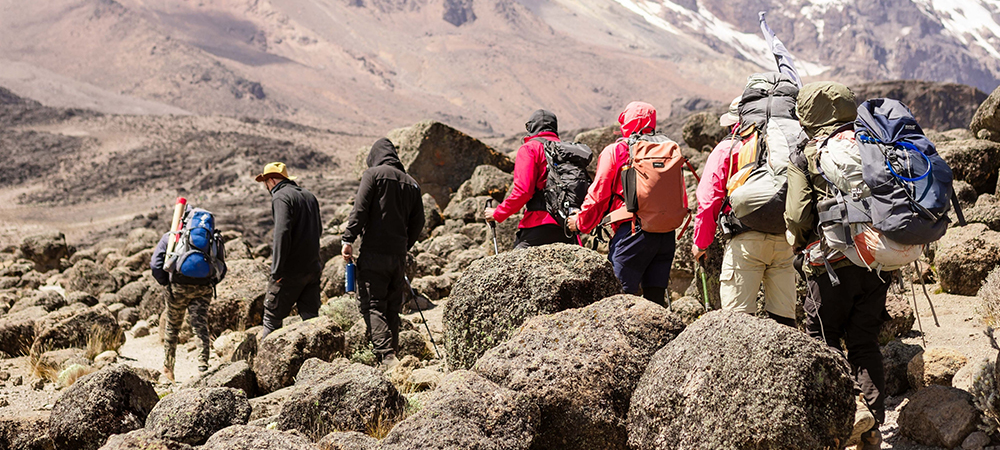
Around mid-trek, you will leave the moorlands and enter the alpine desert zone. Expect rocky paths, sparse vegetation, and colder temperatures. For routes like Lemosho or Machame, this is also the stage for Lava Tower, a moderate climb to high altitude followed by descent to camp. This climb is an essential acclimatization day.
Tips:
- Hydrate frequently to prevent altitude-related fatigue
- Layer clothing to manage changing temperatures
- Use trekking poles for stability on rocky terrain
Day 6: Summit Night Preparation
Before summit night, you will rest at your final camp, usually Barafu Camp or equivalent. Expect a short day of preparation and rest, as summit night begins around midnight. This is the most critical stage, as your body needs energy and mental focus.
Tips:
- Eat a high-energy dinner and drink warm fluids
- Organize gear and clothing for cold summit conditions
- Rest, but avoid falling asleep too early to ensure a midnight start
Day 7: Summit Day – The Challenge and Reward
Summit day is the most demanding, both physically and mentally. Expect a long, steep ascent through scree and rocky terrain, often in freezing temperatures. Reaching Gilman’s Point is an incredible achievement, and continuing to Uhuru Peak rewards you with the highest viewpoint in Africa. After the summit, you will begin descent to the nearest lower camp.
Tips:
- Pace yourself steadily; walking too fast increases risk of altitude sickness
- Stay hydrated and consume snacks for energy
- Celebrate each milestone, but conserve energy for the descent
Day 8: Descent and Celebration
The final day involves descending to the gate, usually through forest or moorland. Expect sore legs and tired muscles, but the journey is shorter and less challenging than the ascent. This is a perfect time to reflect on the achievement and enjoy the surroundings one last time.
Tips:
- Stretch carefully to ease muscle tension
- Take photos and savor the accomplishment
- Prepare for a warm shower and celebration after the trek
Final Thoughts: Be Prepared for Every Stage
Understanding what to expect each day on Kilimanjaro helps first-time climbers plan their energy, pace, and mental focus. Gradual acclimatization, proper gear, and steady trekking are key to a safe and rewarding climb. Remember, Kilimanjaro is as much a mental challenge as a physical one, and each day brings unique experiences and landscapes.
Plan Your Kilimanjaro Climb with Expert Guidance
If you are preparing for your first Kilimanjaro trek, our experienced team can help you design a safe, fully guided itinerary, including route selection and daily pacing strategies.
Contact us for inquiries and custom climbing planning:
- Call: +255 689 500 614
- WhatsApp: +255 784 673 777
- Email: info@kiliholidays.com/ kiliholidaystours@gmail.com
Request a quote using the form below, and our Kilimanjaro specialists will provide a personalized day-by-day climbing plan.